
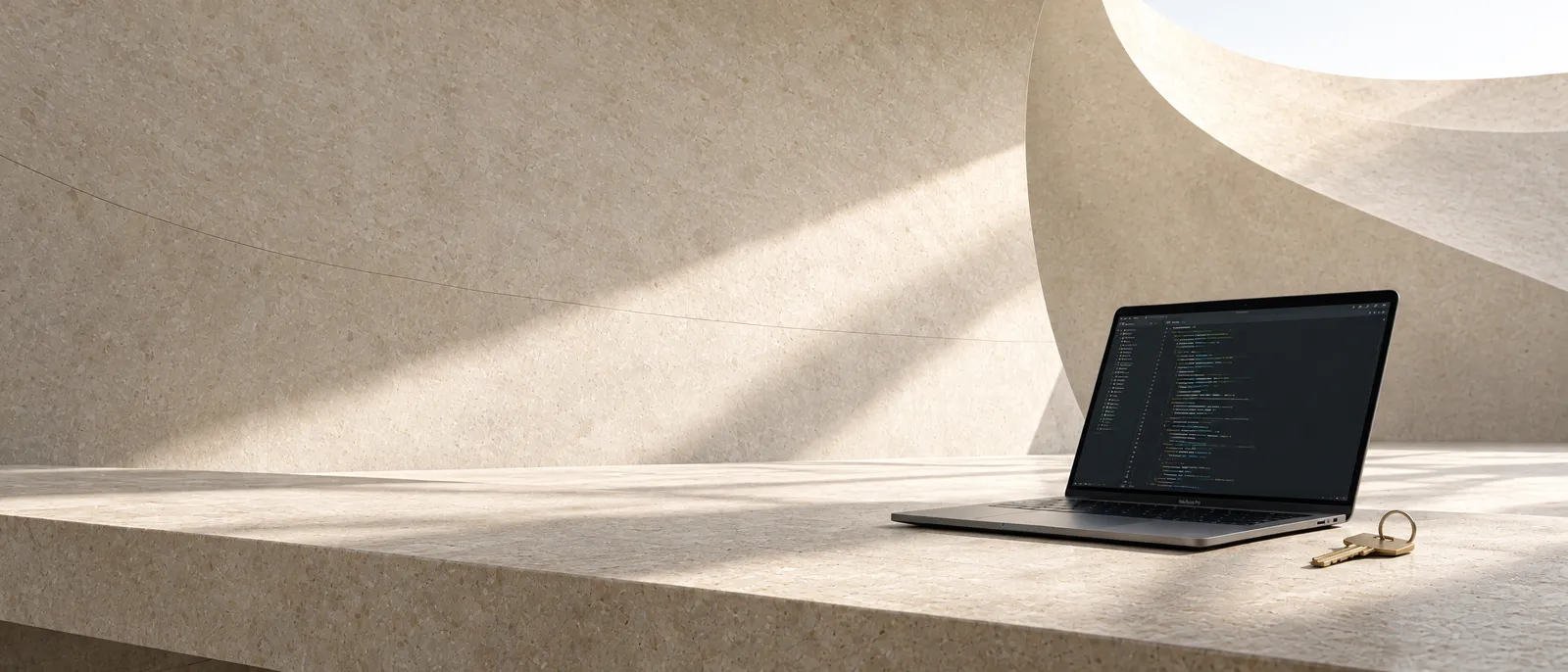
Website, app and software development
Websites, apps and software built to do a clear job, and owned outright by you.
Our software development team plans, designs and builds websites, web and mobile apps, SaaS products and prototypes, starting with what each has to do for the business. You own the code, the accounts and the repository.
Three named offersThree named offers
We don’t just market the destination. We build it.
Strategic websites, web and mobile apps, SaaS products and prototypes, for products new and already live. Each is scoped on its own, works from your Commercial Foundation where you have one, and you own everything we build.
Websites
The Website Build
Strategic website design and development
A website built to make the next decision easier.
Learn more
Apps and software
The Product Build
Web app, mobile app and SaaS product development
The web app, mobile app or SaaS product, built to be used.
Learn more
Prototypes and MVPs
The Prototype Sprint
Prototype, MVP and proof-of-concept development
Test the product question before the larger commitment.
Learn more
Everything inside
Five things we build, and the judgement about which one you need
Most enquiries arrive naming the largest of these. Some leave having bought the smallest, because it was the fastest route to the result. Either way the reasoning comes in writing.
Websites
A site built to be found, to load on a bad connection, and to ask for the business.
A website that loads fast, looks right on a phone and turns visitors into enquiries.
Web and mobile apps
Software people come back to, built on the honest answer about whether you need an app at all.
A custom app that does the job off-the-shelf software cannot, and stays affordable to run.
SaaS applications
A product people keep paying for, built around the week that decides whether they stay.
Launch software people sign up for, start using quickly and keep paying for.
Prototypes
Find out whether people want it before you pay to build it properly.
Find out whether people want your idea before you pay to build all of it.
Design
Every graphic, image and video your brand puts out, made to one system.
Everything your customers see, designed to look like one brand and be easy to use.
Why this matters
Scoped for the decade, not for the quote
We scope software against what it costs to own, not against what it costs to build. The build is a single payment. The operating systems underneath it update every year, libraries move out of support, and payment providers change their APIs on their own schedule. Pricing that in at the start is what makes the third year comfortable.
In practice that means fewer things, chosen deliberately, and built so somebody other than the original author can maintain them. Conventional stacks over clever ones. Documentation written as the work happens. A structure a second developer can read in an afternoon. None of it is glamorous, and all of it is why the thing is still running when you want to extend it.
The other half is deciding what to build at all, which is where the return actually comes from. Whether the market wants this is answerable in weeks, cheaply, before the budget is committed. It is the highest-return step in the process and the one most often skipped.
So we will tell you when a smaller build, an existing platform or no software at all gets you further. The software we are proudest of is the software still in daily use three years later.
43%
Of failed startups lost on product-market fit rather than on code. Which is the one variable you can test before you commit the budget.
70%
Ran out of money, almost always after building the wrong thing well. Scope discipline is the cheapest form of runway there is.
70%
Of startups scale before they have validated anything, which is the most expensive order to do it in. Validating first buys certainty for a fraction of what the build costs.
Three decisions that set what the software costs to own
All three are settled in scoping, before a line is written, and all three are yours to make with the numbers in front of you.
How much goes in version one?
The smallest set that delivers something genuinely useful. A tighter version one ships sooner, costs less to maintain for its whole life, and puts a working tool in front of real users months earlier, which is where every later decision gets its evidence. We show you the full list and the cut. You choose the line.
How do we know anybody wants it?
Put something crude in front of real users and watch what they do. Weeks, not months, for a fraction of the build. It is the cheapest confidence you will ever buy, and it is why we would rather sell a prototype first: you get the answer while the budget is still yours to direct.
Build it, or use something that exists?
We do the arithmetic with you, including what each option costs to keep running rather than only to start. A mature platform maintained by somebody else wins more often than the industry admits, and where it does we will set you up on it properly. Where custom genuinely wins, you see which numbers made it win.
Also from Assay House
Building it is half of it. Getting the right people to find it and use it is the other half, and it is what we do the rest of the time.
Marketing and BrandTell us what you are building, and leave with the shortest route to it
Fifteen minutes with the people who would do the software development South Africa work rather than a salesperson. What it has to do, what it replaces, and whether a smaller version, an existing platform or a prototype gets you the answer faster.