

Paid social advertising
Reach new customers on Facebook, Instagram and LinkedIn, with every rand of spend tracked.
We plan, write, design and run your adverts on Meta, Instagram and LinkedIn - audiences, creative, tracking and testing - on your own ad account, and show you each month what the spend brought in.
Available on its own, or as part of The Growth Programme.
In practice
What this actually is
This is paid advertising on Meta, Instagram and LinkedIn - putting your business in front of people who are not following you and are not searching for you yet. Unlike search, the demand is not already there, so the advert has to create the interest rather than answer it.
This is the paid side. Running your accounts, posting and answering replies is social media management.
What we do
- Campaign strategy
- What the campaign has to achieve, and where paid social fits against everything else you are doing.
- Audience targeting
- Who to reach, built from your own customer data wherever possible rather than from interest boxes.
- Campaign setup
- Built around one objective - awareness, traffic, leads or sales - because a campaign trying to do two does neither.
- Advertising creative
- Static, video and carousel made for each placement, with enough genuinely different versions to learn something.
- Lead generation
- Campaigns that collect enquiries, either in the platform or on your own site.
- Remarketing
- Advertising to people who already visited, engaged or abandoned a basket.
- Budget management
- Spend moved toward the audiences and creative that are working, and away from the ones that are not.
- Reporting
- One monthly report in rands: spend, results, cost per result and what changes next.
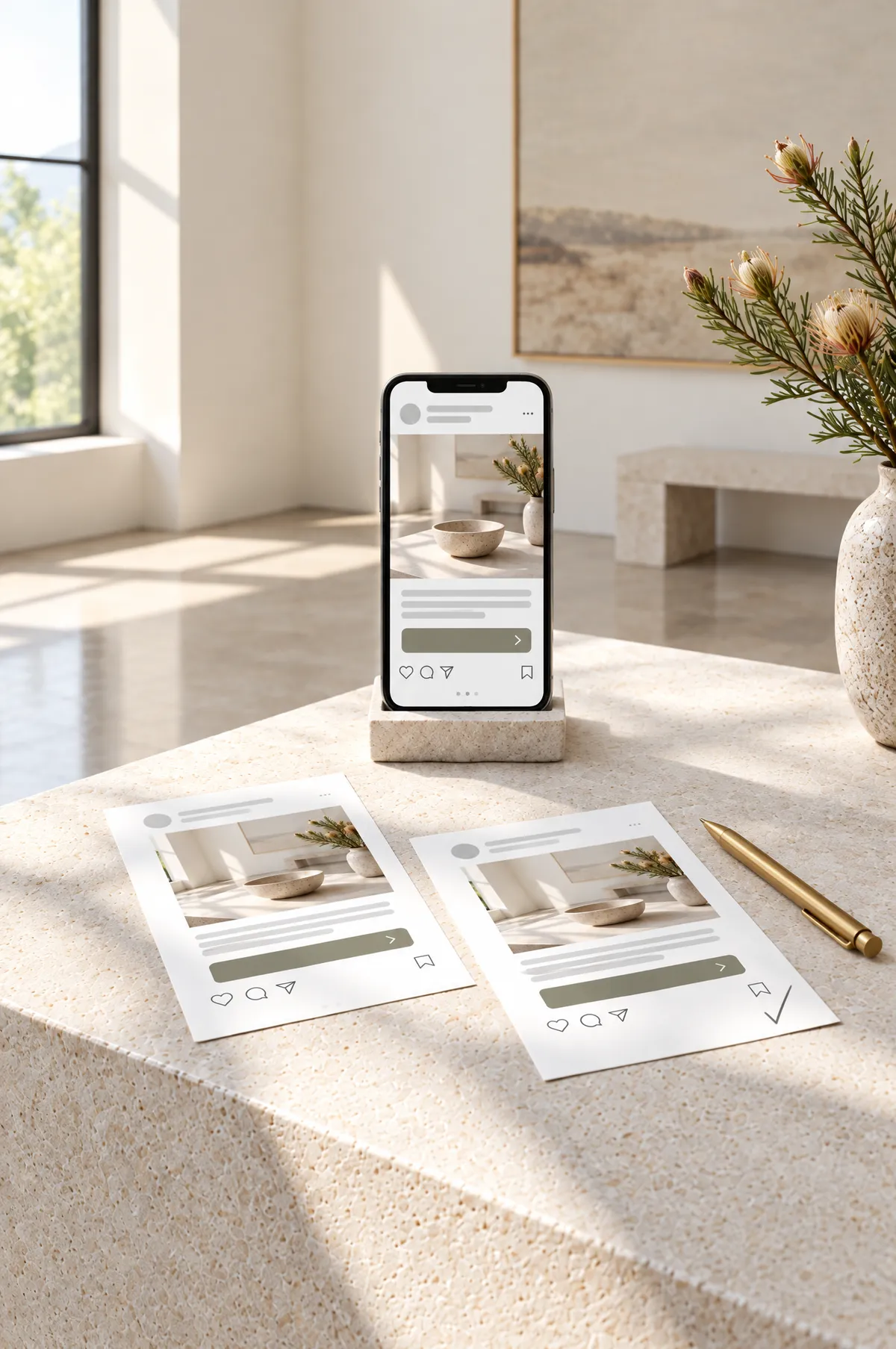
Spend with a clearer purpose
Advertising connected to what happens next.
More than a collection of campaigns. A properly considered acquisition system, with clearer measurement, better decisions, and an ongoing understanding of what the marketing investment is actually producing.
Talk to us about paid socialWhy the thing everyone rushes is the thing that decides it
Ask most business owners what makes advertising work and they will say targeting. Ask what they spent the most time on last campaign and they will say targeting. Nielsen ran the numbers across roughly five hundred campaigns and found the creative - what the advert actually is and says - accounted for 47% of the sales lift. Every media decision combined, the audiences and the placements and the timing, came to 36%.
That was already true when audiences were something you built by hand. It became structural when the platforms changed how they work. Meta now retrieves ads by reading the creative itself and predicting who it will land with, rather than leaning on the audience box you filled in. The advert is no longer a message delivered to a targeted group. The advert is how the platform decides who the group is.
The practical consequence is blunt and it is good news for a small budget. You cannot fix a dull advert with a clever audience, and you no longer have to be the person with the best data to win - you have to be the person with the better advert. That is a fight a smaller budget can win against a national brand, which was not true five years ago.
The discipline
An advert is the third of four things, and the first two decide it
Almost every campaign that fails, failed before a single advert was made or after the click, and almost every post-mortem looks only at the middle. Two of these are things a customer never sees, and they set the ceiling on the two they do.
The offer
Whether it is worth answering
- A reason to act now
- A price that makes sense
- Risk taken off the buyer
- Something a competitor cannot copy by Friday
This holds it up
The creative
It earns the stop and the click
- The first second does the work
- Made for the placement, not resized into it
- Several genuinely different angles
- Built to be replaced
They see this
The landing
It survives the arrival
- Says what the advert said
- Loads fast on mobile data
- One obvious next step
- Nothing new to decide
They see this
The loop
It gets less wrong every month
- One question per test
- Winners scaled, losers killed early
- Fatigue caught before it costs
- Written down, so it compounds
This holds it up
Every advert is a question, not a bet. An advert that lost and taught you something was cheap. An advert that lost and taught you nothing is the only genuine waste in a media budget, and it is what happens when nobody writes the result down.
Measurement
How you will know it is working
Advertising is the fastest thing to measure and the easiest to waste, so paid social advertising South Africa businesses can hold to account is reported on money in and money out, and nothing softer.
What we report on
- Spend, cost per result and return on ad spend, on your own ad account
- Which audiences and creatives carry the account, and which are being switched off
- Where a campaign is not going to work, said early rather than at month end
- What the account looks like when we stop, because it stays yours
Before you ask
The questions that come up first
Do you take a percentage of ad spend?
No. It is a flat monthly fee per channel, so our incentive is not to talk you into spending more.
Who pays Meta?
You do, directly, on your own account. We never front ad spend and never invoice it back to you. It keeps your data yours and keeps our invoice to you honest.
What budget should I start on?
Enough for the platform to learn, which in South Africa usually means at least R150 to R250 a day per campaign for three to four weeks. Below that you are paying for a test that cannot finish. We will tell you before you start if your budget cannot carry the plan.
What happens if it does not work?
We say so, in the monthly report, with the numbers. Then we either change the thing that is wrong or we tell you to stop. We have told a client to stop before.