
On 28/06/2024 Nike had the worst trading day in its 53-year history. The shares fell about 20%, and roughly $28 billion of market value went with them. Plenty of explanations followed. The one marketers keep sharing is the most useful for anyone building a business: the balance of brand building vs performance marketing tipped too far one way, and the bill took four years to arrive.
This is not a story about a giant losing its touch. It is a story about two different jobs being run as one, and it applies to a business with two thousand customers as much as to a company turning over $46 billion a year.
What Nike changed, and why it looked like the right call
In 2020 Nike went all in on selling direct. Its own stores, website and apps came first, and wholesale partners were cut back hard. Marketing followed the money. Massimo Giunco, a former senior brand director at the company, described the shift as a move from brand marketing to digital marketing, and from building the brand to activating sales.
On a dashboard it looked superb. Direct sales carry better margins, digital spend reports back by the click, and every rand or dollar can be traced to an order. Nobody gets questioned in a board meeting about a campaign with a clear return.
That is the trap. Cutting the brand budget is a remarkably efficient way to make this year's marketing look good at next year's expense.
Performance marketing looks efficient because it spends what the brand saved
Mark Ritson put it plainly in Marketing Week: the ramped-up performance spend "delivers good ROI because it continues to run on the fumes of past brand marketing." Decades of sport, athletes and storytelling had given people a reason to choose Nike before they ever searched for a shoe. Paid search and retargeting were converting that stored-up preference, and the reports gave the credit to the ads.
Stop topping up the tank and the engine keeps running for a while. Then the cost turns up somewhere the dashboard was never pointed.
Performance marketing measures what it harvests. It cannot measure what nobody planted.
Where the cost showed up, years after the decision
Discounting
Stock built up and had to be cleared. Gross margin fell from 46.0% in the 2022 financial year to 43.5% in 2023. Nike's own filing names higher markdowns among the causes, alongside freight and input costs.
Shelf space
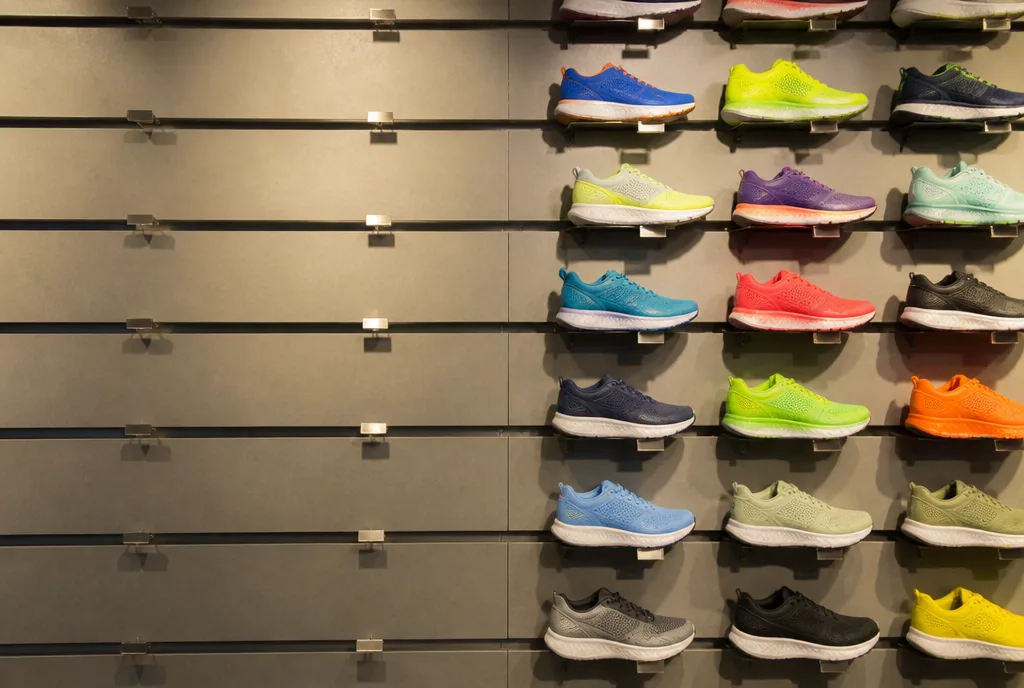
The wholesale shelves Nike stepped back from did not stay empty. Hoka and On, running brands with something specific to say, took the space and the runners standing in front of it.
Value
In June 2024 Nike forecast a sales decline far steeper than analysts expected. The shares fell about 20% the next day, the worst session in the company's history.
None of these arrive in the week the brand budget is cut. That delay is exactly what makes the trade so tempting, and so hard to undo once it shows.
Brand was one mistake of four, and the honest version is more useful
It would be convenient to say Nike stopped building its brand and paid for it. It would also be incomplete. Ritson names four errors: product innovation slowed, marketing went too short-term, the direct-to-consumer push damaged wholesale relationships, and a pandemic spike in online buying was read as permanent.
The four feed each other. A brand with nothing new to show has less to build on. A brand that leaves the shelves shrinks its own reach. A brand that plans around one strange year plans for a customer who was never coming back. The marketing mix is the one that hid the others longest, because it kept the numbers looking healthy while the rest went wrong.
Putting the money back does not bring the customers back on the same day
Elliott Hill took over as chief executive in October 2024 and moved investment back into brand marketing, sport and wholesale partners. Nearly two years on, the recovery is real in places and slow overall. Nike's results for the first quarter of its 2027 financial year, published on 01/10/2026, showed revenue down 4% to $11.2 billion, with Nike Direct down 8% and digital sales down 13%. The shares hit a 13-year low the same day.
Brand building works on a lag in both directions. The damage takes years to show, and so does the repair.
What this means for a business still building its name
You are not Nike, and that makes the lesson sharper rather than softer. Nike had decades of stored-up preference to burn through before anyone noticed. A business that launched last year has none. If every rand goes to ads aimed at people already looking for something like yours, you are bidding against every competitor for the same small group of buyers, and you have given them no reason to choose you except price.
So brand building vs performance marketing is the wrong way to frame the decision. They are two jobs, and a business needs both of them funded on purpose:
Building demand
A clear position on why the business is the better choice, a story people can repeat, proof from real customers, and a point of view your category can argue with. This is what makes someone choose you before they start comparing.
Capturing demand
Search, landing pages, demos, retargeting and onboarding email for people already in the market. This is what turns that preference into an enquiry, a sale or a sign-up.
The right split depends on your stage and your category, and it will move as you grow. What does not move is the order of operations: capture can only convert what building has already made.
Three questions to ask of your own marketing this month
- 01If you switched off every paid campaign tomorrow, would anyone still search for your business by name?
- 02Can a stranger say what makes you different in one sentence, without using the word better?
- 03Are your best results coming from people who already knew you, and is the campaign being given the credit?
If the answers are uncomfortable, the dashboard is probably flattering you. Nike's flattered it for about four years.
Sources and method
- Nike Inc. Form 10-K for FY2023 (gross margin 46.0% to 43.5%, with markdowns among the stated causes) and Nike's Q1 FY2027 results release, 01/10/2026.
- Mark Ritson, Marketing Week, 23/09/2024; Massimo Giunco, LinkedIn, 28/07/2024; Forbes and Inc. on the share fall of 28/06/2024.
Written by Assay House, a South African brand strategy and creative agency. Published 2 October 2026.